
NACAC Advocacy Toolkit
The NACAC Advocacy Toolkit is designed to help college admission professionals understand and engage in advocacy to advance equitable access to higher education. Advocacy is the act of speaking up, educating policymakers, and taking action to influence decisions that affect students, schools, and communities. While the tools for advocacy are largely the same at the federal, state, and local levels, the policymakers you engage with and the decisions they make vary.
Contact NACAC’s Advocacy Team
Sean Robins
Director of Advocacy
legislative@nacacnet.org
Decisions that impact education include:
Federal
Student aid, civil rights protections, and nationwide education standards (e.g., FAFSA regulations, Title IX enforcement, federal funding for K–12 and higher education).
State
State financial aid programs, education budgets, teacher certification requirements, and state-level admissions policies.
Local
School district policies, local funding, curriculum decisions, and program implementation in K–12 and higher education.
By engaging in advocacy, you can help ensure these decisions reflect the needs and interests of students and promote fair access to postsecondary education.
You are already an advocate. Your daily work as a college counseling or admission professional has equipped you with the skills needed to engage with elected and appointed officials. Your expertise makes you a valuable source of information for policymakers shaping education decisions. This toolkit provides guidance, an overview of NACAC’s efforts, and practical resources to help you apply the skills you already have to advocate effectively — both nationally and in your own community.
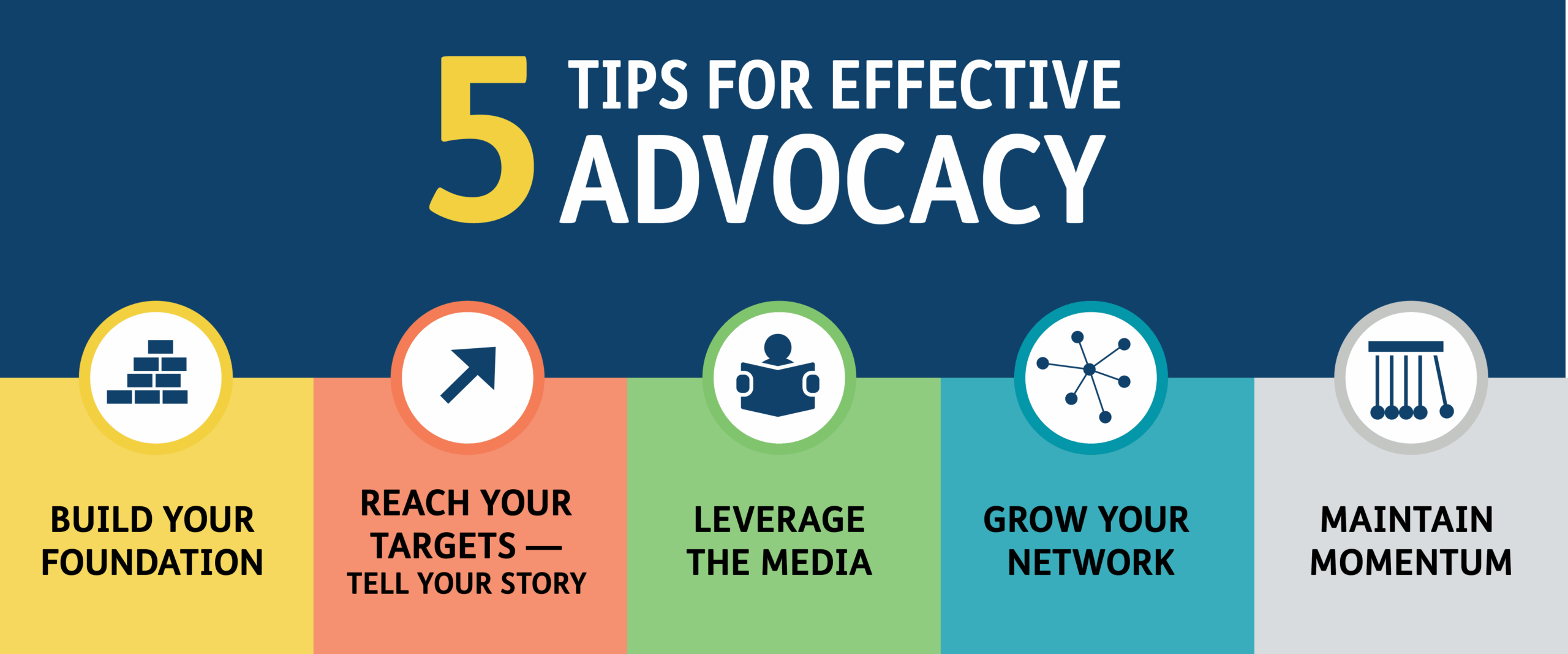
Click/tap for full infographic.
Elements of the Toolkit
Basics of Advocacy and Government Relations
Basics of Advocacy and Government Relations
Whether it is helping students and families navigate the college admission process or educating others on policy decisions, NACAC members engage in advocacy every day. Read more
National Advocacy Efforts
National Advocacy Efforts
These decisions impact students, families, and the professionals who support them. Read more
State Advocacy Efforts
State Advocacy Efforts
Advocacy at the state level is distinct from federal efforts but closely interconnected. Read more
Key Committees and Their Functions
Key Committees and Their Functions
Federal education legislation typically starts in various House or Senate education committees. Read more
How a Bill Becomes a Law
How a Bill Becomes a Law
The 14 steps that transform an idea into a law of the land. Read more
Glossary of Legislative Terms
Glossary of Legislative Terms
Understanding and using the same legislative vocabulary is critical for effective advocacy. Read more
Glossary of Acronyms
Glossary of Acronyms
This is where to go if you don’t know your FTC from your NSLDS. Read more
Meeting With Legislators
Meeting With Legislators
Engaging directly with your members of Congress is one of the most effective ways to advance NACAC’s priorities and ensure that students and counselors are heard in policy decisions. Read more
NACAC’s Monthly Advocacy Checklist
NACAC’s Monthly Advocacy Checklist
NACAC’s Monthly Advocacy Checklist offers quick, practical actions you can take each month to make a difference for students and our profession. Read more
Tips for Effective Advocacy
Tips for Effective Advocacy
Effective advocacy blends preparation, strategy, and authentic storytelling. Read more
Action Alerts
Action Alerts
Action alerts are one of the most effective tools for mobilizing support quickly. Read more
Advocacy Campaigns
Advocacy Campaigns
Unlike one-off actions, campaigns are broad in scope and often involve multiple steps, stakeholders, and communication channels. Read more
Preparing Advocacy Materials
Preparing Advocacy Materials
Effective advocacy depends on clear, well-crafted materials. These resources help you raise awareness, engage allies, and influence decision-makers. Read more
Writing Letters to Lawmakers
Writing Letters to Lawmakers
Letters remain one of the most effective advocacy tools for influencing public policy. Read more
Talking Points
Talking Points
Talking points distill your campaign’s core messages, arguments, and recommendations into a concise, accessible format. Read more
Issue Briefs
Issue Briefs
An issue brief is a concise, factual overview of a topic that provides readers with the background they need to understand the issue’s history, context, and current status. Read more
Press Releases
Press Releases
A press release is one of the most effective tools for engaging the media in your advocacy campaign. Read more
Op-Eds
Op-Eds
Opinion-editorials (op-eds) are a highly visible tool for educating and influencing a broad audience on important education issues. Read More
Visiting the State Capitol
Visiting the State Capitol
State and local advocacy efforts mirror national advocacy in many ways — they are just closer to home and often more accessible. Read more
Planning a Legislative Conference
Planning a Legislative Conference
A legislative conference is one of the most visible and impactful elements of a government relations program. Read more
Basics of Advocacy and Government Relations
You Are Already an Advocate
Advocacy is the act of supporting what matters to you. Whether it is helping students and families navigate the college admission process or educating others on policy decisions, NACAC members engage in advocacy every day. Terms like “government relations” or “lobbying” can seem formal or intimidating, but they are simply about bringing your voice into the decision-making process.
As counseling and admission professionals, NACAC members bring expertise and credibility that many traditional lobbyists cannot offer. You understand the challenges students face and how policies directly affect practice. That experience makes you a powerful and trusted voice.
Where to Engage
Policies that affect college access and admission are shaped by decisions made at every level of government and across institutions. Whether local or national, here is where your advocacy can make a difference:
- State and federal legislation
- Executive orders
- Court rulings
- Ballot initiatives
- Grassroots efforts
- Local or institutional decisions (school boards, superintendents, college presidents, provosts, deans)
No matter where a decision originates, your perspective matters. Speaking up — through a phone call, email, meeting, or public comment — can influence outcomes.
Why Your Voice Matters
In Washington, D.C. and in state capitals, advocacy plays a central role in shaping policy. Lawmakers rely on input from constituents to understand the real-world impact of their decisions. If they do not hear from you, they may make a decision without understanding the full scope of its impact.
Remember: You do not need to be a political expert to make a difference — you only need to be willing to speak from your experience and values.
The Keys to Effective Advocacy
Effective advocacy requires two things: being informed and being organized. It is important to understand the issue, who is affected, the possible solutions, and the consequences of inaction. Once you have that foundation, you can act with intention and focus.
This toolkit is a starting point. It is designed to help you engage clearly and confidently, whether in a conversation with a congressional office or through public commentary.
Where Politics Meets Policy
In our representative government, public officials are elected by the very people affected by their decisions. Although campaigns and elections are distinct from policy work, they have a significant influence on how issues are addressed. Understanding the political context is critical when preparing to advocate.
Constituents have the ability to shape both policy and politics. Reminding elected officials that you are a voter — and that your professional experience reflects the needs of students in their district — strengthens your impact. Your dual role as a practitioner and as a community leader makes you a valuable resource to lawmakers seeking informed perspectives.
National Advocacy Efforts
Federal policy decisions shape nearly every aspect of college access and admission — from how much need-based financial aid is available to which students benefit from college-preparatory opportunities in high school. These decisions impact students, families, and the professionals who support them. By engaging in advocacy at the national level, NACAC ensures that the needs and experiences of college counseling and admission professionals inform the policies that affect their work and the students they serve.
Effective advocacy helps:
- Secure funding for federal student aid programs.
- Influence legislation and regulations that govern access to higher education.
- Elevate the profession of counseling and admission.
- Protect students’ opportunities regardless of background.
This work underscores a central belief: policy should expand, not limit, pathways to higher education.
NACAC’s Advocacy Goals
NACAC’s public policy work is grounded in two central goals: (1) supporting students as they transition from high school to postsecondary education, and (2) strengthening the work of counseling and admission professionals who guide them. To advance these goals at both the federal and state levels, NACAC maintains a national advocacy structure led by professional staff in collaboration with a network of 23 affiliate government relations chairs.
How NACAC Advocates at the Federal Level
NACAC engages in federal advocacy through a variety of approaches, including:
- Developing and sharing research-based policy recommendations.
- Submitting public comments on proposed regulations.
- Meeting with members of Congress and federal agencies.
- Building coalitions with peer organizations to amplify our impact.
- Elevating member stories to illustrate how policies play out in real schools and communities.
These activities ensure NACAC is a credible, influential voice in national debates on education policy.
Role of the NACAC Advocate
NACAC’s advocacy efforts succeed when members actively participate. Effective advocacy is not limited to a title or position — it relies on engagement across the full membership. At a minimum, all NACAC members are encouraged to stay informed and take action on organized alerts.
Several resources are available to support your advocacy efforts:
- NACAC Engage
- Advocacy columns in The Journal of College Admission
- Regular Advocacy and Policy updates on the NACAC Admitted blog
- Policy updates from affiliate chairs
- State-level columns in affiliate publications
Staying informed is straightforward — most updates are already integrated into the resources members regularly receive. NACAC’s Advocacy in Action platform serves as a central hub for policy information and engagement. Whether you are new to advocacy or an experienced voice, it provides practical tools to take action.
Affiliate chairs and NACAC staff are ready to support members in getting involved. To start, email: legislative@nacacnet.org.
How Members Can Engage in National Advocacy
NACAC’s voice in federal policy is strongest when members across the country take part. Whether you are brand new to advocacy or already active at the state or local level, there are multiple ways to get involved in national efforts:
- Stay informed and take action
- Use NACAC’s Advocacy in Action and this toolkit to organize your advocacy efforts.
- Follow NACAC’s policy updates in the Admitted blog, The Journal of College Admission, and affiliate publications.
- Share your perspective
- Provide stories from your students, families, or school community that NACAC can use to illustrate the impact of federal policy decisions.
- Share local policy developments with NACAC staff to inform national advocacy efforts.
- Reach out with ideas for federal or state-level engagement.
- Participate in federal outreach
- Join meetings with your members of Congress during NACAC’s Legislative Summit or set up visits in your home district.
- Collaborate with affiliate government relations chairs to organize advocacy events, campaigns, or visits in your state.
- Volunteer and lead
- Get involved with your affiliate’s government relations committee to support both state and federal advocacy.
- Encourage colleagues to engage in NACAC advocacy alerts and initiatives.
- Share your stories of impact to strengthen NACAC’s collective voice.
- Build your advocacy skills
- Attend sessions at the NACAC conference and the Legislative Summit that focus on public policy and advocacy.
- Use NACAC’s Advocacy Toolkit to strengthen your confidence in engaging with policymakers.
By engaging in these ways, members help ensure that the experiences of counseling and admission professionals — and the students they serve — shape national conversations about higher education.
NACAC Priority Areas
NACAC’s advocacy priorities typically focus on four main areas:
- Expanding access to quality college counseling for all students
- Increasing the availability of need-based financial aid
- Promoting access to rigorous, college-preparatory curricula
- Supporting the counseling and admission profession
Throughout the year, NACAC responds to a range of policy developments, including federal and state legislation, proposed regulations, hearings, and major funding decisions. While some advocacy efforts are planned in advance — such as those related to appropriations or reauthorization of key education laws — others arise in response to current events. NACAC staff coordinate closely with affiliate chairs to mobilize members and communicate across the network.
Stay informed about current efforts on NACAC’s Advocacy page.
NACAC Conference
The national annual NACAC conference provides professional development opportunities across all areas of the counseling and admission field — including public policy and advocacy. NACAC staff ensure that advocacy is visible and accessible to all attendees, with sessions, events, and opportunities for engagement.
Affiliate chairs meet during the conference to exchange strategies, share updates, and build relationships. These conversations help align local efforts with national priorities and support a coordinated, year-round advocacy network.
More information about the conference is available at https://nacacconference.org/.
State Advocacy Efforts
Why State Advocacy Matters — and the Federal Connection
Advocacy at the state level is distinct from federal efforts but closely interconnected. Policies at both levels shape the college admission landscape, from financial aid programs and state scholarships to dual enrollment and student support services. While federal policy often sets broad frameworks, state laws determine how these policies are implemented locally.
Engaging in state advocacy ensures that students’ needs are represented where decisions are made and complements national advocacy by:
- Strengthening the profession’s voice and influence.
- Raising the profile of local affiliates.
- Advancing policies that directly benefit college-bound students.
State-Level Advocacy and Affiliate Engagement
The adage “all politics are local” stands the test of time: lawmakers are often more responsive to constituents — people who live, work, and vote in their district — than to messages from national organizations alone. Even a few calls from counselors or admission professionals in a legislator’s district can be more persuasive than a stack of letters from a national office.
State-level advocacy also:
- Encourages real-time, localized feedback on policy proposals.
- Builds long-term relationships between policymakers and the college admission counseling profession.
- Creates pathways for federal and state priorities to reinforce one another.
Getting Started: Affiliate Goals and Networks
Affiliates vary in size, resources, and government relations experience, but every affiliate can lead meaningful advocacy efforts. Effective state advocacy begins with:
- Identifying clear goals and objectives: Focus on a few priorities that align with your affiliate’s mission and member expertise.
- Collaborating with members and partners: Engage institutional colleagues and allied organizations to find shared priorities.
- Building a support network: Mobilize a reliable network of members, institutional partners, and allied groups to amplify advocacy efforts.
With priorities and a network in place, affiliates can translate planning into coordinated action, from letter-writing campaigns to legislative briefings.
NACAC’s Role in Supporting State Advocacy
While affiliates lead state advocacy efforts, NACAC can offer targeted support and resources to enhance advocacy campaigns. To enhance impact, the association can:
- Monitor select state legislation.
- Provide policy backgrounders and fact sheets on NACAC’s positions.
- Offer template letters or statements of support.
- Issue state-level action alerts through NACAC’s Advocacy in Action platform.
- Supply contact information for state legislators.
- Assist with building affiliate-level member contact lists.
NACAC staff also provide consultation on messaging, strategy, and outreach. Coordinated national and state campaigns often achieve the greatest impact, particularly when priorities align.
The Power of Individual Action
Successful advocacy relies on motivated individuals. Even the most strategic campaigns need active engagement from members to succeed. A single dedicated advocate can ignite an affiliate-level initiative, inspire others, and create momentum.
If your affiliate does not yet have a formal government relations program, you can still:
- Stay informed about policy issues affecting students.
- Maintain regular contact with state officials.
- Share advocacy actions with NACAC and affiliate leaders to encourage peer engagement.
Resources: NACAC’s Advocacy Toolkit is a practical starting point for identifying elected officials, tracking legislation, and building personal advocacy strategies.
Compliance: State Regulations and Reporting Requirements
While NACAC staff are registered federal lobbyists, individual advocates working on behalf of affiliates must be aware of relevant state lobbying rules. State governments have increasingly implemented registration and reporting requirements that vary by jurisdiction.
In many states, individuals who volunteer to advocate on behalf of a nonprofit association are not required to register as lobbyists. However, others may require registration or disclosure of specific lobbying activities. The definitions of lobbying, advocacy, and what constitutes official engagement vary widely.
Before engaging in any advocacy in your state — particularly if acting on behalf of your affiliate—research the current registration and reporting laws. Some advocacy work may require nothing; others may require simple paperwork. Advance preparation helps ensure compliance and protects both you and your affiliate from potential penalties.
A helpful resource for beginning this research is the National Conference of State Legislatures (NCSL): https://www.ncsl.org/ethics/ncsl-ethics-resources.
The Role of Affiliates
NACAC’s advocacy work depends on the active engagement of its members. A well-informed, committed advocate can make a greater impact than an entire committee that lacks direction or focus. Staff rely on affiliate input from across the country to identify policy trends, track emerging issues, and shape the association’s national response. Many federal issues begin in the states — and vice versa — making affiliate engagement essential to effective advocacy.
Role of the Affiliate Chair
Affiliate government relations chairs serve as critical links between NACAC staff and local advocacy efforts. They lead their affiliate’s public policy engagement, serve as points of contact for state and regional issues, and mobilize members in response to action alerts and advocacy opportunities.
Chairs are expected to:
- Stay informed about policy developments in their region.
- Respond to and share NACAC action alerts.
- Distribute federal and state policy updates to affiliate members.
- Encourage affiliate leadership and members to participate in advocacy.
- Organize at least one government relations or policy session at the affiliate’s annual conference.
- Build or maintain an affiliate-level advocacy network, where applicable.
Chairs also serve as advisors to NACAC staff on state-level issues and can strengthen national efforts by sharing successful models and strategies. NACAC staff are available to support affiliates through technical assistance and can facilitate connections among states facing similar challenges.
Chairs are encouraged to attend the annual NACAC conference to meet with peers, share updates, and inform advocacy priorities for the year ahead. Staff welcome communication in advance of the conference to support meeting preparation.
Setting Measurable Outcomes
Effective advocacy is easier to plan and evaluate when clear, measurable objectives are established. Examples include:
- Member engagement: Track the number of members participating in advocacy campaigns or attending policy briefings.
- Legislative interactions: Record the number of meetings, calls, or emails delivered to policymakers.
- Policy impact: Note legislation influenced, amendments adopted, or regulations clarified.
- Public awareness: Monitor media coverage or public statements that elevate the affiliate’s voice.
Tracking these outcomes helps refine strategies, celebrate successes, and demonstrate the value of advocacy.
Coalition-Building
Advocacy can be more effective when organizations collaborate around shared priorities. Consider:
- Identifying local and regional partners with aligned missions.
- Establishing formal or informal coalitions to pool resources, expertise, and networks.
- Coordinating messaging and outreach to present a unified position to policymakers.
- Leveraging coalition partners’ contacts and credibility to expand reach and influence.
Evaluation and Reflection
After an advocacy campaign, evaluating both outcomes and processes can strengthen future efforts:
- Review successes and challenges: Identify which strategies worked and which could be improved.
- Document lessons learned: Record best practices, useful contacts, and effective messaging.
- Solicit feedback: Ask participating members and partners for input on enhancements.
- Plan adjustments: Use insights to refine priorities, outreach methods, and coalition-building efforts for upcoming campaigns.
Sample Templates and Case Studies
Providing concrete examples helps members translate guidance into action. Useful approaches include:
- Sharing template letters or emails for reaching state legislators.
- Offering sample talking points for meetings, panels, or public testimony.
- Highlighting case studies of successful advocacy campaigns, illustrating strategies, challenges, and outcomes.
- Encouraging members to adapt templates to their context while maintaining key messages aligned with NACAC positions.
Templates and case studies reduce barriers to engagement, inspire participation, and increase the likelihood of successful advocacy outcomes.
Key Committees and Their Functions
Federal education legislation typically starts in the House or Senate education committees, but several others play important roles in shaping the landscape for college bound students and the professions that support them.
House Education and Workforce / Senate HELP (Health, Education, Labor, and Pensions)
These are the primary committees overseeing federal education policy, from early childhood to postsecondary and workforce development. They also cover issues like job training, retirement, and health care as they relate to workers.
Appropriations Committees
These committees determine annual funding levels. The education budget is handled by the Labor-HHS-Education subcommittees in both chambers. They decide how to divide a set funding amount, known as the “302(b) allocation” [302(b) refers to the section of public law], across all education, labor, and health programs.
Budget Committees
The House and Senate Budget Committees are responsible for drafting the budget resolution, which sets the overall federal spending limits for the upcoming fiscal year. While Congress does not have to pass a budget resolution every year — and often skips it during surplus years — the resolution helps guide how federal dollars are allocated. Spending is divided into 20 broad categories, or “functions.” Education falls under Function 500, which also covers workforce training, employment services, and social services (excluding health and Social Security). The resolution itself is not binding, but appropriations committees rely on the Function 500 figure to set their 302(b) allocations. Any reconciliation bills must also start with the budget committees.
House Foreign Affairs / Senate Foreign Relations
These committees shape international education policy, including programs for U.S. students abroad and foreign students studying in the U.S.
House and Senate Judiciary Committees
These committees handle immigration, intellectual property, tech policy, and federal court issues — all of which can affect students, institutions, and the broader education ecosystem.
House Ways and Means
This committee handles all tax-related legislation — including education-related tax benefits — and oversees Social Security, trade, and tariffs. The Senate does not have a direct equivalent.
How a Bill Becomes a Law
STEP 1: A Bill is Introduced
A Senator or Representative writes and introduces the bill.
- The bill dies if it is never assigned to a committee.
STEP 2: Committee Review
The bill is sent to a committee that specializes in the topic.
- The bill dies if the committee ignores it.
STEP 3: Committee Hearings
Experts and the public may testify about the bill. The committee studies the bill closely.
STEP 4: Committee Markup
Committee members discuss, debate, and change the bill.
STEP 5: Committee Vote
The committee votes on whether to send the bill forward.
- The bill dies if it fails the vote.
STEP 6: Bill Goes to the Full House or Senate
If passed by the committee, the bill is prepared for a full debate and vote.
STEP 7: Floor Debate and Vote
The full House or Senate debates and then votes.
- The bill dies if it fails the vote.
STEP 8: Sent to the Other Chamber
If passed, the bill moves to the other chamber (House or Senate).
- The bill dies if the other chamber ignores or rejects it.
STEP 9: Repeat Steps in Other Chamber
The other chamber repeats steps 2–7.
- The bill dies if it fails at any point in the second chamber.
STEP 10: Conference Committee (If Needed)
If both chambers pass different versions, a conference committee meets to combine them into one version.
STEP 11: Final Vote in Both Chambers
Both the House and Senate must approve the final version.
- The bill dies if either chamber rejects the final version.
STEP 12: Sent to the President
The bill goes to the President for approval.
- The bill dies if the President vetoes it (unless Congress overrides the veto).
STEP 13: President Signs the Bill
STEP 14: The Bill Becomes Public Law
Glossary of Legislative Terms
Understanding and using the same legislative vocabulary is critical for effective advocacy. Lawmakers, staff, and stakeholders rely on precise terms to discuss policy, funding, and programs. This glossary provides clear definitions of common legislative terms, helping advocates speak confidently, interpret legislative developments accurately, and engage with policymakers using a shared language. Familiarity with these terms ensures your advocacy is informed, consistent, and impactful.
Act
A bill or measure that has passed one or both houses of Congress. Also used for legislation that has become law.
Amendment
A proposal to change or an actual change to a bill, motion, act, or the Constitution.
Appropriations act
Grants the actual money to be spent, usually after adoption of authorizing act.
Appropriations subcommittee
Subcommittee responsible for reviewing and recommending funding levels for specific agencies and programs within a larger appropriations committee.
Authorization bill
Similar to an authorizing act; legislation that establishes or continues a federal program or agency and sets parameters for its funding.
Authorization ceiling
Maximum amount of funding allowed under an authorizing statute.
Authorizing act
Authorizes a program, specifies its general aims, and generally sets a ceiling on the monies that can be used to finance it, i.e. HEA, ESEA. Usually enacted before the related appropriation bill is passed.
Authorizing committee
The committee that has jurisdiction for a given program. Most education programs are authorized by the House Education and the Workforce Committee and the Senate Health, Education, Labor and Pensions Committee.
Bill
A proposal that has been introduced in one or both houses of Congress.
Budget resolution
Sets forth a congressional budget plan for the next seven years. The plan must be carried out through subsequent legislation, including appropriations and changes in tax and entitlement laws.
Chairman’s mark
Markup of legislation at the discretion of the committee or subcommittee chair, with or without input from the members of the committee or subcommittee.
Closed rule
In the House, a prohibition against amendments not ap- proved by the committee which brought the bill to the floor. The House must accept or reject the bill as-is.
Cloture
A Senate procedure to end a filibuster, requiring 60 votes.
Committee of the whole
A mechanism to expedite business in the House, where the full House of Representatives becomes a committee, allowing for less rigid rules and a quorum of 100 instead of 218.
Conferees
Members of a conference committee, composed of both Sena- tors and Representatives appointed to reconcile the Senate and House versions of the same bill.
Conference
A meeting between committee members of the two houses of Congress to reconcile the Senate and House versions of the same bill.
Continuing resolution (CR)
Legislation enacted to provide authority for agencies to continue operations until their regular appropriations are enacted. Used when actions on appropriation are not completed by the beginning of the fiscal year. A CR often maintains prior-year funding levels temporarily.
Direct spending
Mandatory spending arranged through authorization or entitlement. Compared to discretionary spending.
Discretionary spending
Spending for programs whose funding levels are determined through the annual appropriation process.
Earmark
Funding directed by Congress to a specific project or location, often included in larger appropriations bills.
Engrossed bill
Final copy of a bill passed by either chamber with amendments. The engrossed bill is passed to the other chamber for debate and approval.
Enrolled bill
Final copy of a bill that has passed both the House and Senate in identical form. Enrolled bills are sent to the President for signature into law.
Entitlement reform
Efforts to change mandatory spending programs, such as student aid or Medicare.
Entitlements
Programs for which the level of spending is controlled by the authorizing legislation, although funding may be provided by either an authorization or appropriations act.
Filibuster
Strategy used in the Senate to intentionally delay a vote through continuous floor debate.
Fiscal year
A 12-month period for using federal funds, beginning October 1of the previous calendar year; e.g. fiscal year 2030 begins October 1, 2029.
Floor
The full chamber of the House or Senate, where debates and votes occur.
Hearings
Committee sessions held to hear testimony by expert witnesses on a subject relating to upcoming legislation. Most hearings are open to the public.
Legislation
Laws or proposed laws.
Level funding
When the appropriations subcommittee or full committee provides the same level of funding for a program as the previous fiscal year, without adjusting for inflation.
Mark-up
Process in which committee or subcommittee members go through a measure section by section, revising language and inserting new phrases by amendment.
Omnibus
A catch-all bill that combines many bills regarding the same general subject, e.g. an omnibus appropriations bill that combines multiple appropriations bills.
Omnibus reconciliation
When multiple reconciliation measures are combined into one bill.
Override a veto
When both the House and Sen- ate vote by a two-thirds majority to set aside a Presidential veto of legislation.
Pocket veto
When the President fails to either sign into law or veto legislation submitted to within ten days of adjournment, the bill effectively dies.
Point of order
A formal objection raised during debate if a rule or procedure is violated.
President’s budget
President presents a budget to the Congress in February of every year, showing his spending priorities for the fiscal year that begins the following October. The President’s budget is merely a suggestion for Congress and holds no legislative weight, unless Congress decides to adopt it in whole or part when they formulate their own budgets. The President’s budget is important because it identifies the Administration’s policy priorities.
Quorum
Minimum number of members required to conduct official business.
Ranking member
Most senior member of the minority party on a committee. Ranks first in seniority after the committee chairman.
Reconciliation
Reconciliation is an effort to reduce the federal deficit by severely cutting federal direct spending (mandatory programs, as opposed to discretionary programs). Examples of mandatory programs: Medicare, Medicaid, student loans, farm subsidies.
Rescission
Legislation revoking spending authority previously granted by Congress. Different from “level-funding” in that in the fiscal year the rescission occurs the affected program ceases to exist.
Resolution
A measure passed only in one chamber to express the sentiment of that chamber; does not have the force of law, nor is it passed to the other chamber for consideration.
Report
A committee’s written record of its actions and views on a bill. The committee “reports” its findings to the House or Senate. Committee reports are usually available on Congress.gov.
Rider
A measure added to another, often unrelated bill with the purpose of one provision passing on the strength of another.
Rule (House rules)
Governs how a bill is debated on the floor, including open or closed rules for amendments.
Sunset provision
A clause that causes a law or program to expire after a specific period unless renewed.
Table a bill
A motion to put a bill aside and remove it from consideration; bills rarely return for consideration.
Unfunded mandate
A law that requires state or local governments to perform certain actions without providing funding.
Glossary of Acronyms
Glossary of Common Acronyms
Federal Agencies and Offices
BLS – U.S. Bureau of Labor Statistics, A Division of the U.S. Department of Labor
CFPB – Consumer Financial Protection Bureau
CNCS – Corporation for National and Community Service
DHS – U.S. Department of Homeland Security
DOJ – U.S. Department of Justice
DOS – U.S. Department of State
ED – U.S. Department of Education
FEC – Federal Elections Commission
FTC – Federal Trade Commission
GPO – Government Publishing Office
GAO – Government Accountability Office
HRSA – Health Resources and Services Administration
HUD – U.S. Department of Housing and Urban Development
NSF – National Science Foundation
OMB – Office of Management and Budget
OCR – Office for Civil Rights, U.S. Department of Education
OESE – Office of Elementary and Secondary Education, U.S. Department of Education
OIG – Office of Inspector General, U.S. Department of Education
OPE – Office of Postsecondary Education, U.S. Department of Education
USCIS – United States Citizenship and Immigration Services
USICE – United States Immigration and Customs Enforcement
USCCR – United States Commission on Civil Rights
Higher Education Legislation, Acts, and Policy
ADA – Americans with Disabilities Act
CR – Continuing Resolution
CTE – Career and Technical Education
DREAM – Development, Relief, and Education for Alien Minors Act
ESSA – Every Student Succeeds Act
GE – Gainful Employment
HEA – Higher Education Act
HELP – Senate Health, Education, Labor and Pensions Committee
IDEA – Individuals with Disabilities Education Act
Neg Reg – Negotiated Rulemaking
OBBBA – One Big, Beautiful Bill Act
Perkins – Carl D. Perkins Career and Technical Education Act
PL – Public Law
WIOA – Workforce Innovation and Opportunity Act
College Affordability and Financial Aid
EFC – Expected Family Contribution
FAFSA – Free Application for Federal Student Aid
FSA – Federal Student Aid, U.S. Department of Education
FWS – Federal Work-Study Program
Pell – Federal Pell Grant
SAI – Student Aid Index
SEOG – Supplemental Educational Opportunity Grant
NSLDS – National Student Loan Data System
College Access and Student Support Programs
CCAMPIS – Child Care Access Means Parents in School
GEARUP – Gaining Early Awareness and Readiness for Undergraduate Programs
TRIO – Federal outreach and support programs for low-income and first-gen students
SEVIS – Student and Exchange Visitor Information System
Institutions and Populations
AANAPISI – Asian American and Native American Pacific Islander-Serving Institutions
HBCU – Historically Black Colleges and Universities
HSI – Hispanic-Serving Institution
MSI – Minority-Serving Institutions
TCU – Tribal Colleges and Universities
Research, Data, and Advocacy Organizations
ACE – American Council on Education
CEF – Committee for Education Funding
ERIC – Educational Resources Information Center
IIE – Institute of International Education
IPEDS – Integrated Postsecondary Education Data System
NAEP – National Assessment of Educational Progress
NCES – National Center for Education Statistics
NAPSO – National Alliance of Pupil Services Personnel Organizations
NAFSA – Association of International Educators
NASFAA – National Association of Student Financial Aid Administrators
PIRG – Public Interest Research Group
VFA – Voluntary Framework of Accountability
Equity, Civil Rights, and Immigration
DACA – Deferred Action for Childhood Arrivals
DEI – Diversity, Equity, and Inclusion
USCCR – United States Commission on Civil Rights
OCR – Office for Civil Rights, U.S. Department of Education
Meeting With Legislators
Scheduling Logistics
- Identify all legislators who represent your community.
- Review the congressional calendar (House and Senate) to find out when they are in D.C. or back home.
- Decide whether to meet locally or in Washington, D.C.
- Identify the best messenger(s) from your organization — ideally, college admission counselors and, if possible, a student who can share their personal story.
- Prepare a basic agenda:
- Purpose of the meeting
- Meeting length
- Names and roles of attendees
- Contact the congressional office scheduler by phone or email.
- Submit a formal request if required.
- Confirm your meeting one week prior and again the day before.
- Note: It is common that you will meet with a congressional staffer rather than the member of Congress directly. Staffers are often younger professionals who may need to be educated on specifics related to the college admission counseling profession and current education laws and policies. Use this opportunity to build a relationship and provide clear, accessible information.
Finding Common Ground
- Understand their policy priorities:
- Review their official website, social media, and recent constituent newsletters.
- Learn their background:
- Alma mater
- Previous career or professional experience
- Community or social involvement
- Connections to education, college access, or counseling (if applicable)
Preparing Materials
- Create materials to guide your conversation and leave with the member of Congress:
- Relevant data points like the number of students served, counseling outcomes, or access barriers you observe in your community
- Highlights connecting your issues to their stated policy objectives
- A brief student or family impact story or compelling quote
- Practice a concise elevator pitch that can be delivered confidently without notes.
- NACAC provides policy recommendations, resources, and data metrics to support your advocacy on the NACAC Advocacy page.
NACAC’s Monthly Advocacy Checklist
Advocacy does not have to be overwhelming, and you do not have to do it alone. NACAC’s Monthly Advocacy Checklist offers quick, practical actions you can take each month to make a difference for students and our profession. Whether you have five minutes or an afternoon, these steps keep you connected, informed, and ready to speak up on the issues that matter most.
January
- Happy New Year! Check your Secretary of State’s website for important voting dates, including registration deadlines, and mark your calendar. Register to vote if you haven’t already done so, or double-check to ensure you are registered. Learn more about the student voting requirements in your state.
- Contact your affiliate government relations chair(s) to inquire about advocacy engagement opportunities planned in your state in the coming year.
February
- Meet with your members of Congress in their district office during Presidents’ Day district work period. Consider bringing a student along to share their personal story!
- Because most state legislatures are in full swing, many affiliates hold state-level advocacy days this time of year. Attend yours, if available. If your state does not host an advocacy day, consider setting up a meeting with your state elected officials to share more information about NACAC’s policy priorities.
March
- Check the from the Education Commission of the States for any relevant legislation in your state and contact your representative(s) to share your support or concerns.
April
- It’s the beginning of appropriations season on Capitol Hill. Call your members of Congress and encourage them to support increased education funding.
- Meet with your members of Congress in their district offices during the spring district work period. Consider bringing a student along to share their personal story!
May
- It’s graduation season! Write your members of Congress to share a story about a student you’ve known or worked with this year who benefitted from access to quality school counseling, rigorous curriculum, need-based financial aid, or one of NACAC’s other policy priorities.
- Check NACAC’s Take Action webpage and complete any available action alerts.
June
- Happy summer! Now is a great time to contact your members of Congressand make your voice heard on legislation that matters to you.
- Consider inviting elected officials — local and federal — to your school or campus for a visit in the new school year. Invite them to attend a college application night, host a financial aid night, or simply visit campus to speak to students.
July
- Most states’ legislative sessions have adjourned. Reach out to your state elected officials and offer to meet with them to discuss potential legislation for the next session.
August
- Visit your members of Congress while they are home for the August district work period. Consider bringing a student along to share their personal story!
- Happy new school year! Encourage any students you work with who are eligible to vote to register if they have not already done so.
September
- Congress must pass all appropriations bills by Sept. 30 to fund the next fiscal year. Call your members of Congress and remind them to prioritize increased education funding.
- Consider attending the Government Relations Committee meeting and/or adding at least one advocacy-related session at the annual
October
- October means one thing in the college admission world: FAFSA is open! As you work with students who complete the FAFSA, consider sharing stories with Congress about how FAFSA simplification and increased funding for need-based financial aid would benefit your students.
- Several states require voters to register up to 30 days in advance of Election Day. Complete your registration, if necessary, or double-check that you are registered.
November
- VOTE!
- Before the semester ends, reach out to one of your NACAC or affiliate colleagues and encourage them to get engaged with advocacy opportunities in the new year. Show them this checklist to help illustrate how easy it is to get involved!
December
- Register for the NACAC’s Annual Legislative Summit.
- Get a jump on the new Congressional and state legislative sessions. Reach out to your newly elected or re-elected representatives and encourage them to support NACAC’s legislative prioritiesin the upcoming session.
Tips for Effective Advocacy
Effective advocacy blends preparation, strategy, and authentic storytelling. As counseling and admission professionals, you are subject-matter experts. Your insights, experiences, and data can shape decisions that affect students and the profession. This guide moves from foundational principles to practical tactics so you can confidently plan and execute your advocacy efforts.
- Build Your Foundation
Before choosing tactics, strengthen the base that will support every conversation, meeting, and campaign.
Core principles:
- Know your facts — Gather accurate, current data and anticipate potential questions or counterarguments. Be ready to explain not only what you are advocating for, but why it matters.
- Tell your story — Numbers show scale, but stories create connection. Use real examples from your work to humanize the issue.
- Tailor your message — Understand your audience’s priorities and frame the issue in terms that resonate with them, such as economic growth, workforce readiness, or community well-being.
- Be respectful and professional — Courtesy and openness build lasting relationships, even when you disagree.
- Follow up — Send thank-you notes, share resources, and keep lines of communication open after each interaction.
- Leverage digital tools — Use email campaigns, webinars, videos, and social media to reach people who cannot attend in person.
- Build credibility over time — Consistency in outreach and messaging fosters trust.
- Track your progress — Keep a record of contacts, responses, and commitments to refine strategies and show impact.
- Be persistent but patient — Meaningful change takes time and ongoing engagement.
- Reach Your Targets — Tell Your Story
With a strong foundation, focus on delivering your message to the right people in the most effective way. Policymakers and the public respond to information that is credible, concise, and compelling. Connect data to real-world outcomes, and start the conversation with: “Let me tell you a story…”
Tactics:
- Organize letter-writing campaigns — Provide templates, talking points, and guidance for addressing decision-makers. Encourage personal stories tied to student success and consider engaging students or community members.
- Distribute literature — Share fact sheets, issue briefs, impact statements, and short narratives that highlight the stakes.
- Host events — Hold information sessions, town halls, or workshops where participants can ask questions and commit to next steps.
- Hold direct meetings — Request one-on-one or small group meetings with decision-makers to present your perspective in detail.
- Leverage the Media
Media coverage expands your reach, builds public awareness, and can put your issue in front of decision-makers you haven’t reached directly.
Tactics:
- Issue press releases — Announce events, initiatives, or key findings.
- Publish op-eds or letters to the editor — Offer solutions or highlight urgent needs.
- Do interviews or media appearances — Explain the issue in relatable terms.
- Invite media to events — Generate coverage and public interest.
- Run targeted ads or sponsored content — Place your message in strategic publications or social channels.
- Share success stories — Highlight tangible results such as improved access or student achievements.
- Grow Your Network
Advocacy gains power through coalitions. A broad network brings credibility, new voices, and additional resources to your cause.
Who to engage:
- Educators, parents, and students
- Local and state officials
- Business leaders and workforce organizations
- Civic groups, alumni associations, and service organizations
Ways to grow and sustain connections:
- Schedule speaking engagements with schools, community groups, and conferences.
- Host public forums, listening sessions, or information tables at community events.
- Launch a campaign website or social media presence to share updates and calls to action.
- Distribute tailored issue briefs to different audiences.
- Form an advisory committee to guide and support your work.
- Send regular updates via newsletters or email lists.
- Maintain Momentum
Advocacy is rarely a one-time effort. Sustained visibility keeps your cause on the radar for both decision-makers and supporters.
Keep it going by:
- Recognizing and thanking volunteers, partners, and sponsors.
- Providing updates on legislative progress or campaign milestones.
- Sharing success stories to inspire continued involvement.
- Maintaining consistent communication — ongoing outreach is the hallmark of lasting advocacy.
Whether your advocacy spans weeks or decades, thoughtful planning, authentic storytelling, and consistent engagement are the most powerful tools you have for creating change.
Action Alerts
Action alerts are one of the most effective tools for mobilizing support quickly. These alerts typically respond to a time-sensitive development — such as a proposed bill or policy change — and guide advocates on how to respond.
To build an action alert strategy, answer these key questions:
- What is the issue, and what decision is pending?
- Who is responsible for making that decision (your target)?
- What is your recommended action?
Then follow three simple steps:
- Draft your message: Focus on the broad impact — how the issue affects students, families, and communities. Be concise and persuasive.
- Spread the word: Share your message with colleagues, professional networks, and partner organizations.
- Take action: Encourage individuals to send emails, make calls, or attend meetings. Include deadlines and contact information for the decision-makers.
This approach can be adapted to suit local, state, or federal issues, and scaled based on the urgency or complexity of the matter.
Once you become familiar with the format, action alerts become an accessible and effective advocacy tool. For issues that require more sustained attention, action alerts can serve as the foundation for broader, multi-pronged advocacy strategies.
How Action Alerts Are Useful:
- Mobilize large numbers of individuals quickly
- Generate high volumes of messages to decision makers
- Provide an easy entry point for new advocates
- Allow for broad participation, even with limited time or resources
Best Practices for Sending an Action Alert:
- Keep it short: Include only essential background, a clear call to action, and a response deadline.
- Be direct: Avoid long text — quick engagement is the goal.
- Act fast: Send alerts while the issue is still relevant.
- Target wisely: Maintain a current contact list of likely responders/advocates.
- Make it easy: Provide direct links, email templates, or phone numbers to remove barriers.
Action Alert Template
Subject line:
ACTION NEEDED: [Short Description of Issue]
Opening line:
State the urgency and the action needed in one sentence.
Example: Congress is voting this week on [bill name], which could [impact]. Contact your representative today to urge them to [desired action].
Background (2–3 sentences max):
Briefly explain the issue, why it matters, and who is affected.
Example: This proposal would [explain impact]. It affects [students/families/communities]. We need your voice to ensure [desired outcome].
Call to action:
Tell them exactly what to do and by when.
Example: Email or call [target decision-maker] by [date]. Use the sample message below or your own words.
Target contact information:
- Name(s) of decision-maker(s)
- Email, phone number, or online contact form link
- Optional: pre-filled email link or click-to-call button
Sample message:
Dear [Decision-Maker Name],
I am writing to urge you to [specific request]. This issue impacts [who/how]. I ask that you [desired action]. Thank you for your consideration.
Sincerely,[Your Name][Your City, State]
Closing encouragement:
Reinforce urgency and share how they can spread the word.
Example: Please take action today and share this alert with colleagues and friends who care about this issue.
Quick tips for members:
- Keep the alert to one page or less.
- Send it out as soon as the issue arises.
- Use plain, clear language.
- Make it as easy as possible to take action.
Advocacy Campaigns
Advocacy campaigns are organized, proactive efforts designed to create meaningful change over time. Unlike one-off actions, campaigns are broad in scope and often involve multiple steps, stakeholders, and communication channels. They require planning, persistence, and collaboration among diverse groups — including counselors, students, community members, educators, and local or state leaders.
Campaigns can focus on a range of goals such as educating the public, raising awareness about key issues, building coalitions, or influencing policymakers and institutional decision-makers to enact or change policies.
Why Run an Advocacy Campaign
- To build momentum around an issue and create sustained pressure for change.
- To coordinate multiple activities and messages for greater impact.
- To bring together allies from various sectors for a unified voice.
- To educate both the public and decision-makers on the importance of your issue.
- To mobilize supporters for coordinated actions like contacting legislators or attending events.
Planning Your Campaign: A Step-by-Step Checklist
- Set Clear Goals and Objectives
Define what success looks like. Are you seeking passage of a new policy, increased funding, or public support? Make your goals specific, measurable, achievable, relevant, and time-bound (SMART). - Establish a Campaign Calendar
Begin with your key deadline or target date and work backward to plan milestones. Include dates for legislative sessions, public events, media outreach, and internal meetings. Align these milestones with related community activities, such as school board meetings or community fairs, to maximize visibility. - Identify Key Targets and Audiences
Pinpoint the individuals or groups whose decisions or influence matter most — legislators, agency officials, school board members, or community leaders. Also consider secondary audiences such as the media, general public, or potential allies. - Develop a Strategic Approach
Choose the best tactics to reach your targets. This may include in-person visits, phone calls, letter-writing campaigns, social media outreach, public demonstrations, or hosting educational events. - Build a Coalition of Allies
Partner with organizations, institutions, and individuals who share your goals. Collaborating broadens your reach, pools resources, and demonstrates wide support for your cause. - Create a Media and Communications Plan
Use press releases, op-eds, social media posts, and local news interviews to spread your message. Clear, consistent messaging helps educate and persuade a broader audience. - Prepare for Opposition
Anticipate counterarguments or competing viewpoints. Develop responses and strategies to address concerns without alienating potential supporters. - Monitor and Adapt
Track progress regularly and be flexible. Adjust your tactics based on what is working and any changes in the political or community environment.
Sending Campaign Updates
Regular updates are essential for keeping your advocates and stakeholders informed, engaged, and ready to act. Updates can be shared via email, newsletters, blogs, or social media depending on your audience and resources.
Why Campaign Updates Matter
- Keep everyone aligned on campaign progress and next steps
- Prompt timely actions during critical moments
- Share new materials like action alerts, fact sheets, or press releases
- Attract new supporters by demonstrating momentum
- Coordinate activities across different locations or groups
Tips for Effective Campaign Updates
- Format for Easy Reading: Use clear headlines and short summaries. Place the most urgent or important information at the top to grab attention quickly.
- Stay Focused: Limit updates to campaign-relevant content. Avoid unrelated news or lengthy reports that might overwhelm readers.
- Maintain a Consistent Schedule: Whether weekly, biweekly, or monthly, regular updates help build trust and anticipation.
- Use Targeted Distribution Lists: Include both highly active participants and those who prefer to stay informed without immediate involvement.
- Choose the Right Delivery Method: Consider the communication preferences and technological access of your audience when selecting email, print, or digital platforms.
Getting Started: Quick Advice for New Advocates
- Start Small: Focus on a manageable issue or target to build confidence and momentum.
- Learn from Others: Join existing campaigns or advocacy networks to gain experience.
- Use Available Resources: NACAC offers tools, sample letters, and talking points — leverage these to save time and strengthen your message.
- Ask for Help: Reach out to experienced advocates, mentors, or NACAC staff for guidance.
- Be Patient and Persistent: Advocacy is a marathon, not a sprint. Celebrate small victories and keep your long-term goals in sight.
Preparing Advocacy Materials
Effective advocacy depends on clear, well-crafted materials. These resources help you raise awareness, engage allies, and influence decision-makers. Common materials include:
- Fact sheets — Brief, data-driven summaries of the issue, its impact, and the proposed solution.
- Example: A one-page overview showing how test-optional policies increase college access for underrepresented students.
- Talking points — Concise statements to guide conversations, interviews, or presentations.
- Example: Key messages explaining why FAFSA simplification is critical for student success.
- Sample letters or emails — Ready-to-use templates for communicating with policymakers or stakeholders.
- Example: A letter template urging local officials to support increased funding for college counseling programs.
- Issue briefs — In-depth explanations of an issue, often including background, key data, and policy recommendations.
- Example: A detailed report on the challenges faced by first-generation college students and proposed legislative solutions.
- Testimony or op-eds — Personal or organizational statements that can be shared in hearings or media outlets.
- Example: An op-ed from a college counselor highlighting the importance of mental health resources for students.
- Social media posts — Short, compelling messages with links, hashtags, and visuals to increase visibility.
- Example: A post highlighting a recent student success story, paired with a call to support college affordability policies.
Tips for Developing Effective Materials:
- Know your audience. Adjust tone, detail, and format to suit policymakers, community members, or the media.
- Stay concise. Aim for clarity over length — decision-makers have limited time.
- Use credible sources. Incorporate accurate data and cite reputable references.
- Include a clear call to action. Make it easy for the reader to know exactly what you want them to do.
- Leverage visuals. Charts, infographics, and photos can make your points more memorable.
- Keep it adaptable. Once you create a message for one format (e.g., a letter), repurpose it for others (e.g., a press release, fact sheet, or social post).
NACAC’s advocacy staff can support you in drafting or refining your materials, fact-checking information, and ensuring message alignment.
Writing Letters to Lawmakers
Letters remain one of the most effective advocacy tools for influencing public policy. While email and online forms have replaced most traditional mail for congressional offices, the goal is the same: to communicate your position clearly, concisely, and persuasively.
Why Write Letters?
- Educate lawmakers and their staff about issues that matter to your community
- Express support for or opposition to a specific policy, bill, or proposal
- Urge action on pending legislation
- Document your position for the public record
- Influence decision-making by showing broad community engagement
Tips for Effective Letters
- Format
- Use a formal business letter style.
- If writing on behalf of an institution or affiliate, use official letterhead to add credibility.
- Greeting
- Address federal legislators as The Honorable [First and Last Name] followed by their title (S. Senator or U.S. Representative). For example: U.S. Senator John Doe, U.S. Representative Jane Smith.
- For state and local officials, check preferred titles on their official websites.
- Content Structure
- First paragraph: Introduce yourself, your role, and your connection to the legislator’s district (geographic or institutional).
- Second paragraph: State the issue and your position. Keep it to one issue per letter.
- Third paragraph: Provide evidence, examples, or personal stories that illustrate why the legislator should act. Use positive framing when possible.
- Final paragraph: Make a clear, specific ask (e.g., “Please co-sponsor H.R. XXXX” or “Please vote no on SB 123”).
- Style
- Keep the letter to one page (3–5 short paragraphs).
- Be respectful and professional, even if you disagree strongly with the lawmaker’s position.
- Avoid jargon — write so a non-expert can understand the issue.
- Audience
- Write to lawmakers who represent your home address or the location of your institution.
- If relevant, you can copy key committee chairs or bill sponsors but clearly state your constituent connection in your message.
Closing the Letter
- Use a professional closing such as Sincerely or Respectfully.
- Include your full name, title, institution (if applicable), mailing address, phone number, and email.
Pro Tip: Provide sample letters to fellow advocates but encourage personalization. Authentic, constituent-driven messages are more impactful than form letters.
Additional Considerations:
- Timing Matters: Send letters early in the legislative process — before final votes are scheduled.
- Follow Up: Consider calling the office a week after sending your letter to confirm it was received and to reiterate your message.
- Know the Staff: Legislative aides are often the first to read constituent mail. Writing clearly and respectfully helps your message reach the lawmaker.
Sample Letter to a Lawmaker (Adapt for email or print)
[Your Name][Your Title][Your Institution or Organization][Street Address][City, State ZIP][Email Address] | [Phone Number] [Date]
The Honorable [First Last Name]U.S. [Senator/Representative][Office Address][City, State ZIP]
Dear Senator [Last Name] / Representative [Last Name]:
Paragraph 1 – Introduction
State who you are, your role, and your connection to the legislator’s district. Example:
I am [Your Name], [Your Title] at [Institution/Organization] in [City], and a resident of [City/Town]. My work focuses on supporting students in accessing and succeeding in higher education.
Paragraph 2 – State the Issue and Position
Briefly explain the policy or legislation, and your stance.
I am writing to urge you to support H.R. 1234, the College Access and Success Act, which will expand need-based financial aid for low-income students.
Paragraph 3 – Support with Evidence or a Story
Share relevant data, personal experience, or a compelling example.
At [Institution], we have seen students abandon their college plans due to unmet financial need. This bill would directly help students like [First Name], who is the first in their family to attend college
Paragraph 4 – Make the Ask
Be direct and specific about what you want the legislator to do.
I respectfully ask that you co-sponsor H.R. 1234 and advocate for its swift passage.
Closing
Thank the lawmaker and offer to provide further information.
Thank you for your leadership and your commitment to expanding educational opportunity. I welcome the chance to share more about the impact of this bill on students in our community.
Sincerely,
[Your Name][Your Title][Your Institution or Organization]Talking Points
Preparing Talking Points
Talking points distill your campaign’s core messages, arguments, and recommendations into a concise, accessible format. They help ensure everyone advocating on your issue is delivering a consistent, compelling message.
While they may be presented as a list of persuasive arguments, they are most effective when supported by credible data, compelling examples, and — when appropriate — visual elements such as graphs or charts.
How Talking Points Are Useful
- Ensure consistency — Provide a standard summary of key campaign messages across all advocates, meetings, and communications.
- Support credibility — Offer evidence that reinforces your advocacy goals and positions.
- Boost confidence — Help participants feel prepared when speaking to lawmakers, media, or stakeholders.
- Guide strategy — Serve as a reference to refine messaging and focus on priority issues.
- Adapt easily — Allow quick customization for different audiences or events without changing the core message.
Considerations When Preparing Talking Points
Format
- Use a bulleted list for clarity and quick reference.
- Arrange points in a logical sequence:
- Problem/Context – Briefly describe the root of the issue.
- Impact – Outline consequences of inaction, including who is affected.
- Solution/Recommendation – Present actionable solutions or policy asks.
- Highlight your most important points first; busy readers may only skim.
Content
- Use clear, direct, and concise language — avoid jargon and overly technical terms.
- Focus on 3–5 primary messages; too many can dilute impact.
- Include a mix of facts, stories, and human impact to make messages memorable.
Supporting Evidence
- Use recent, credible, and relevant data — cite your sources.
- When possible, pair numbers with a short narrative (“Over 40% of students… meaning thousands lose opportunities each year.”).
- Include visuals such as charts, infographics, or key quotes to increase retention.
Tone
- Keep the tone professional yet approachable.
- Avoid overly negative framing; emphasize solutions and positive outcomes.
Length
- Strive for brevity while maintaining substance — ideally one to two pages for in-person use, no more than four pages if background context is included.
- Avoid redundancy; each point should offer new insight or reinforcement.
Additional Tips
- Test your talking points — Share them with a colleague or stakeholder to see if they’re clear, compelling, and memorable.
- Keep them updated — Revise regularly to reflect new data, developments, or shifts in your campaign’s priorities.
- Create versions for different audiences — For example, one for lawmakers, one for the media, and one for general community engagement.
- Use active voice — This keeps your points more persuasive and direct (“This policy will increase college access for…” rather than “College access will be increased by this policy.”).
- End with a clear ask — Always make sure your talking points conclude with a specific, actionable request.
Issue Briefs
An issue brief is a concise, factual overview of a topic that provides readers with the background they need to understand the issue’s history, context, and current status. Unlike talking points, which are persuasive and argument-driven, issue briefs are primarily informational. They explain what the issue is, why it matters, and where it currently stands — while also outlining your organization’s position, priorities, or goals.
Why Issue Briefs Are Useful
- Provide a quick, reliable way to inform audiences, including staff, partners, stakeholders, media.
- Serve as a foundation for future advocacy materials, ensuring all campaign messaging is rooted in accurate background information.
- Help mobilize supporters by showing how your priorities connect to the history and current state of an issue.
- Can be distributed broadly to educate those not yet engaged in your campaign.
Key Elements to Include in an Issue Brief
- Title and Date – A clear title describing the issue, plus the publication date so readers know how current the information is.
- Summary/Overview – A short paragraph summarizing the issue in plain language.
- Background and History – A factual, chronological account of how the issue developed. Use a timeline format if the history is complex.
- Current Status – The most recent and relevant information, such as pending legislation, regulatory changes, court rulings, or new research findings.
- Stakeholders and Perspectives – Key players, including policymakers, coalitions, advocacy groups, or agencies, and their positions on the issue.
- Your Organization’s Position and Priorities – Your stance on the issue, your recommended solutions, and the outcomes you seek.
- Relevant Data and Evidence – Statistics, charts, or credible research that illustrate the scope or impact of the issue.
- References and Resources – Links or citations for readers who want more information.
Writing and Formatting Tips
- Clarity First – Lead with the most essential facts. Avoid jargon or overly technical terms unless your audience is specialized.
- Concise Sections – Use subheadings, bullet points, and short paragraphs to make scanning easy.
- Balance Detail and Brevity – Aim for 1–2 single-sided pages. If the issue is complex, consider creating a longer “issue paper,” but still keep the brief for quick reference.
- Visual Aids – Use charts, graphs, infographics, or pull quotes to break up text and highlight key points.
- Plain Language Summary – Consider including a one-paragraph plain language overview for non-expert readers.
Distribution
- Share with policymakers, partners, coalition members, media contacts, and grassroots advocates.
- Post online for easy access and sharing.
- Include as part of legislative visit packets, advocacy day materials, or digital campaigns.
Issue Brief Template
Title of Issue
Organization Name | Date
Summary/Overview
(1–2 sentences)
Briefly describe the issue in plain language, focusing on what it is, why it matters, and who is affected.
Background & History
(3–5 bullet points or a short paragraph)
Provide a concise history of the issue, including key milestones, major policy changes, or relevant events. Use a timeline if the sequence is important.
Current Status
(3–5 bullet points)
List the most recent developments: pending legislation, current regulations, ongoing court cases, or recent data findings. Include dates where possible.
Key Stakeholders & Perspectives
- Supporters: List individuals, organizations, or agencies in favor, along with their positions.
- Opponents: List individuals, organizations, or agencies opposed, with a brief explanation of their stance.
Organization’s Position & Priorities
State your organization’s stance and the actions you recommend. Include your top priorities or goals for addressing the issue.
Relevant Data & Evidence
(Optional – bullet points or chart/graph)
Highlight compelling statistics or research findings that illustrate the scope or urgency of the issue.
References & Resources
List sources, reports, or links for readers who want more information.
Contact:
Name, title, email, and phone number of the staff contact for this issue.
Press Releases
A press release is one of the most effective tools for engaging the media in your advocacy campaign. It can spark interest from local reporters, education editors, and even national outlets if the story is timely and relevant. Education reporters — whether at major newspapers, local weeklies, or campus publications — are always looking for compelling stories that connect education policy to their audience. Well-crafted and well-timed press releases can raise public awareness, mobilize supporters, and capture the attention of decisionmakers.
How Press Releases Are Useful
- Announce campaign events, activities, or ideas, emphasizing why they matter to the public.
- Highlight your positions or reactions to policy decisions, statements, or actions by government officials.
- Generate media coverage that can get the attention of lawmakers and other key decisionmakers.
- Attract interest, support, and volunteers for your campaign.
- Shape the public narrative by ensuring your perspective appears in news coverage.
Key Elements to Include When Writing a Press Release
- Format
- Use a standard press release format: one-inch margins, single-spaced, and ideally one page in length. If a second page is necessary, type “– more –” at the bottom of the first page and “###” centered at the end of the release.
- Place “FOR IMMEDIATE RELEASE” at the top in all caps, followed by the release date.
- Include a concise, compelling headline and, if needed, a subhead to provide context.
- Use the inverted pyramid style — put the most important facts and quotes at the top, with supporting details later.
- Content
- Focus on newsworthy information: an event, a new report, a policy change, or a noteworthy action.
- State facts simply and briefly; avoid jargon or overly technical language.
- Use a strong opening paragraph that answers: Who? What? When? Where? Why? How?
- Include at least one relevant quote from a credible spokesperson (e.g., a campaign leader, subject matter expert, or affected student).
- Keep paragraphs short (two to three sentences).
- Timeliness
- Send releases promptly — ideally the day of the event or announcement, or shortly before to encourage coverage.
- For breaking news responses, send within hours so your statement is part of the initial coverage.
- Focus
- Limit each release to a single topic or action.
- Make it clear who the information is intended for and why it matters to them.
- Contact Information
- Include the name, title, phone number, and email of a primary contact person at the top and bottom of the release.
- Provide links to additional resources, your campaign’s website, and social media handles for quick follow-up.
Additional Tips
- Subject line matters: When emailing your release, make your subject line clear and attention-grabbing.
- Personalize when possible: If sending to individual reporters, reference their recent coverage or beat in your email note.
- Follow up: A quick call or email to confirm receipt can help move your release from inbox to story.
- Keep a media list: Maintain updated contact information for relevant reporters and outlets.
- Archive your releases: Post them on your website so reporters and supporters can reference them later.
Press Release Template
FOR IMMEDIATE RELEASE[Date]
Headline: Keep it Short, Clear, and Compelling
Optional Subhead: Adds context or highlights significance
City, State – [Opening paragraph: Answer the 5 Ws and H—Who, What, When, Where, Why, and How. Make it concise and newsworthy. Example: “The National Association for College Admission Counseling (NACAC) today announced a new initiative to support first-generation college students in navigating the admissions process.”]
Second Paragraph: Provide More Detail[Explain the significance, provide context, and include key facts or figures. Keep paragraphs short and easy to scan.]
Quote Paragraph: Include a Relevant Quote[“This initiative will help ensure all students have access to the resources they need,” said Jane Doe, NACAC Director of Policy. “By connecting students with admissions guidance early, we can help more students succeed in college.”]
Additional Information / Background Paragraph[Include supporting details, background on NACAC or your campaign, relevant statistics, or context that strengthens your story.]
Call to Action (Optional)[If applicable, provide ways for readers to get involved, register for an event, or access resources.]
Contact Information
Name: [Full Name]Title: [Job Title]Phone: [Phone Number]Email: [Email Address]Website: [Website URL]
Tips for Using the Template:
- Keep it one page whenever possible. Use “– more –” if a second page is needed.
- Always send a brief, personalized email to reporters with the release attached or in the body.
- Follow up within 24–48 hours for important announcements.
Op-Eds
Opinion-editorials (op-eds) are a highly visible tool for educating and influencing a broad audience on important education issues. Published in newspapers opposite the editorial page, op-eds are typically written by professionals, experts, or community members who have direct experience or a strong interest in the issue. Unlike letters to the editor, op-eds provide more space to explore a topic in depth, making them an excellent opportunity to convey nuanced arguments, share evidence, and highlight the local impact of an issue.
How Op-Eds Are Useful
- Showcase campaign goals and community impact: Demonstrate how the issue affects your local community, students, or schools.
- Establish expertise and credibility: Position authors as knowledgeable practitioners or thought leaders, which lends weight to your arguments.
- Raise awareness and mobilize support: Educate the public and rally stakeholders around your cause.
- Provide resources for follow-up: Identify authors and campaign leaders as contacts for additional information or commentary.
- Engage decision-makers: Capture the attention of policymakers, board members, or institutional leaders who can influence change.
Key Considerations When Writing an Op-Ed
- Author
- Choose someone whose title or position lends authority, such as an affiliate president, vice president of enrollment, dean of admission, or other recognized education leader.
- Op-eds can be ghost-written, but the named author should review and approve the content.
- Content
- Focus on a single issue or central argument.
- Emphasize the local impact of the issue on your community or students.
- Incorporate data, trends, or historical context to strengthen your point.
- Offer unique insights or timely perspectives — breaking news or unconventional wisdom increases your chances of publication.
- Style
- Keep sentences short, clear, and concise.
- Maintain a factual and professional tone; avoid overly emotional or alarmist language.
- Engage readers early with a strong opening that highlights relevance or urgency.
- Action
- Clearly state your campaign’s goals or desired outcomes.
- If opposing a policy or practice, propose practical alternatives or solutions.
- Specify the actions you want readers, policymakers, or stakeholders to take.
- Length
- Typically 500–800 words.
- Offer to assist with editing to meet the newspaper’s requirements.
- Timing
- Align with relevant events, deadlines, or national observances (e.g., back-to-school, early decision deadlines).
- Respond to breaking news or current debates to maximize relevance.
- Placement
- Submit op-eds to one newspaper per region or market; simultaneous submissions are generally not accepted.
- Editors typically require at least two weeks to review and edit submissions.
- Follow up respectfully to confirm receipt and inquire about publication timing.
Additional Tips
- Headline and lead: Create a strong, compelling headline and opening paragraph that grabs attention.
- Localize your examples: Highlight specific programs, students, or community stories to make your argument tangible.
- Balance data and narrative: Combine statistics with human-interest elements for maximum impact.
- Cite sources: Include credible references where appropriate but avoid excessive footnotes or jargon.
- Visuals and multimedia: Some outlets accept charts, images, or links to videos — check submission guidelines.
- End with a call to action: Close with a concise statement of what readers can do to support the issue.
Visiting the State Capitol
State and local advocacy efforts mirror national advocacy in many ways — they are just closer to home and often more accessible. When planning to advocate at the state or local level, follow the Meeting With Legislators Guide to schedule meetings with policymakers and their staff.
A visit to the state capitol can be the centerpiece of your state’s advocacy strategy. Face-to-face conversations with lawmakers are powerful because of the influence of constituent voices. Multiply that influence by the number of advocates participating in a coordinated capitol visit, and you have a significant force for change. Fortunately, this impact can be achieved without unnecessary complexity — provided you plan carefully.
Step 1: Define Your Mission and Goals
Before diving into logistics, clarify your purpose:
- Are you asking lawmakers to support or oppose a specific bill?
- Are you seeking to educate them on an issue?
- Are you offering expertise and resources as education professionals?
Knowing your goals will shape every other decision, from the talking points you develop to the timing of your visit.
Step 2: Prepare Participants
Many attendees may be new to advocacy. The more comfortable and informed they are, the more effective their meetings will be. Consider:
- Orientation session: Begin the day with a briefing on the issues and an overview of how to communicate with lawmakers effectively.
- Advance materials: Send talking points, fact sheets, and issue briefs ahead of time so participants arrive prepared.
- Role-playing: Simulate meetings to practice concise introductions, delivering the “ask,” and answering questions.
- Team leaders: Assign experienced advocates to lead small groups and ensure everyone stays on message.
Step 3: Craft Your Message
Consistency is key. All participants should deliver the same core messages while personalizing them with their own experiences.
- Leave-behind materials: Provide a one-page, well-branded handout for each office. Include your key message, supporting facts, and contact information.
- Personal stories: Encourage participants to connect policy issues to real-world experiences with students, families, or institutions.
- Follow-up plan: Ask participants to exchange contact information with staffers and commit to sending a thank you email after the visit.
Step 4: Manage Logistics
Smooth logistics keep the day focused on advocacy, not confusion.
- Gathering space: Use a university lecture hall, student union, or free public space for your orientation rather than paying for a rental venue.
- Transportation: Arrange carpools, buses, or public transit for participants.
- Scheduling: Check the legislative calendar to ensure lawmakers are in session. NCSL’s website (https://www.ncsl.org/) is a helpful resource.
- Group assignments: Organize participants by district so they meet their own legislators whenever possible.
Step 5: Timing and Strategic Alignment
Plan your visit when it can have maximum impact:
- Just before key committee votes or legislative deadlines.
- During budget season — when funding decisions are made.
- Around relevant public events (e.g., State of the State address, back-to-school season, or college decision deadlines).
Coordinate your visit with other advocacy activities such as media outreach, community engagement, or social media campaigns to amplify your message.
Step 6: Engage the Media and Public
A capitol visit is an excellent opportunity to raise public awareness.
- Invite local reporters to cover your visit.
- Share photos and updates on social media using consistent hashtags.
- Encourage participants to write follow-up op-eds or blog posts about their experience.
Step 7: Follow Up
The visit is just the start of the relationship. Afterward:
- Send thank you notes to every lawmaker and staff member you met.
- Share any promised resources or data promptly.
- Keep legislators updated on developments related to your issue.
Need help? NACAC staff can help prepare materials, coordinate messaging, and offer strategic guidance for state-level advocacy efforts. Contact legislative@nacacnet.org for support.
Capitol Visit Checklist
Your quick guide for a successful state capitol advocacy day
Before the Visit
- Set Your Goals — Know your “ask” (support, oppose, or raise awareness about a bill/issue).
- Know the Facts — Review talking points, fact sheets, and any issue briefs.
- Practice — Role-play meetings; rehearse your introduction, key points, and closing.
- Coordinate Teams — Group participants by legislative district where possible.
- Confirm Appointments — Double-check meeting times and locations.
- Plan Logistics — Arrange transportation, identify a gathering spot, and know where to park or use public transit.
- Prepare Materials — Print leave-behinds (one-pagers with contact info) and bring your business cards.
During the Visit
- Arrive Early – Allow time for security and navigation inside the capitol.
- Dress Professionally — Present a unified, polished appearance.
- Introduce Yourself as a Constituent — Lawmakers respond to constituents first.
- Deliver Your Message Clearly — State your position and why it matters.
- Share a Personal Story — Connect the issue to real experiences.
- Make the Ask — Be direct about the action you want taken.
- Leave Materials Behind — Provide your one-pager and business card.
- Thank Them for Their Time — Regardless of their position.
After the Visit
- Send Thank-You Notes — Email or mail within 48 hours.
- Share Follow-Up Materials — Send any promised information or data.
- Update Your Team — Let organizers know how meetings went.
- Stay Engaged — Keep lawmakers informed on the issue and future developments.
- Share Your Story Publicly — Post on social media, write an op-ed, or speak at community events about the visit.
Pro Tip: Always remember — building relationships is just as important as making your ask. Today’s conversation can lead to tomorrow’s policy change.
Planning a Legislative Conference
Planning a Legislative Conference
A legislative conference is one of the most visible and impactful elements of a government relations program. Whether focused at the state, regional, or national level, a well-planned conference can educate and mobilize participants, strengthen advocacy networks, and raise the visibility of key issues among policymakers, the media, and the public.
While advocacy is the underlying goal, the primary purpose of the conference should be to educate — both the participants and, where possible, decision-makers themselves. Attendees should leave the conference equipped to advance the cause during the event and continue advocacy year-round.
Set Clear Objectives
Like any advocacy effort, start with the “why.” Define:
- What you want the conference to accomplish.
- How it aligns with your broader campaign or organizational priorities.
- Your primary audience (e.g., lawmakers, members, the public, students, coalition partners).
A strong conference is often built around one major advocacy activity — this could be a visit to the state capitol or Washington, D.C. to meet with your legislators, but it could also be:
- A coordinated call-in or email action day.
- A large-scale petition signing.
- A public awareness rally or press event.
- Policy roundtables or listening sessions with key stakeholders.
If direct lawmaker engagement is not your immediate goal, design activities that target the decision-makers who can most influence your issue.
Narrow the Focus
Choosing one primary issue or a small set of related issues will:
- Streamline materials and messaging.
- Help participants stay focused.
- Avoid overwhelming decision-makers with unrelated information.
Build a Balanced Agenda
A well-structured legislative conference blends information sharing with skills-building. Consider including:
- Keynote speakers – lawmakers, agency officials, researchers, or advocacy leaders.
- Panel discussions – featuring diverse perspectives on the issue.
- Interactive workshops – on how to meet with legislators, craft an advocacy message, or how to share personal stories effectively.
- Networking opportunities – to foster connections among attendees, coalition partners, and policymakers.
- Direct advocacy actions – in person, online, or hybrid formats.
Engage Stakeholders and Lawmakers
- Invite policymakers not only to speak, but to listen; consider hosting listening sessions or Q&A forums.
- Partner with allied organizations to expand reach, resources, and perspectives.
- Involve students whenever possible — they bring authentic voices and powerful stories.
Logistics and Planning Essentials
- Select a date that aligns with key legislative calendar moments (e.g., budget discussions, bill hearings).
- Ensure accessibility for all participants, including ADA compliance and language access.
- Prepare and distribute advocacy materials in advance, including talking points, fact sheets, and action instructions.
- Provide training for first-time advocates before the conference begins.
- Assign volunteers or staff to guide participants through the schedule and advocacy activities.
Follow-Up is Non-Negotiable
The impact of a legislative conference depends on what happens afterward. Plan for:
- Thank you messages to speakers, lawmakers, and attendees.
- Sharing event photos, videos, and key takeaways through social media and email.
- Encouraging participants to take the next advocacy step (e.g., contacting a lawmaker again, submitting op-eds, joining a working group).
- Tracking outcomes — both immediate (attendance, media coverage) and long-term (policy changes, ongoing engagement).
Legislative Conference Planning Checklist
Step 1 – Define the Purpose
☐ Identify the advocacy goals for the conference.
☐ Confirm how the event supports your broader campaign strategy.
☐ Decide who your primary audience is (lawmakers, members, coalition partners, students, public).
Step 2 – Select a Focus
☐ Choose one primary issue or a small set of closely related issues.
☐ Ensure the focus is clear, specific, and actionable.
Step 3 – Choose the Main Advocacy Activity
☐ State capitol visits (if lawmakers are the primary targets).
☐ Coordinated call-in or email action day.
☐ Petition signing or letter-writing campaign.
☐ Public rally or media event.
☐ Policy roundtable or stakeholder listening session.
Step 4 – Build the Agenda
☐ Keynote speaker(s) who bring credibility and insight.
☐ Panel discussions with multiple perspectives.
☐ Interactive workshops or skills sessions.
☐ Networking opportunities.
☐ Direct advocacy action(s).
Step 5 – Engage Key Stakeholders
☐ Invite lawmakers to participate and listen.
☐ Partner with allied organizations to broaden reach.
☐ Involve students to amplify authentic voices.
Step 6 – Plan the Logistics
☐ Pick a date that aligns with key legislative calendar moments.
☐ Secure accessible and inclusive venues.
☐ Arrange technology for hybrid or online participation, if needed.
☐ Develop and share advocacy materials (fact sheets, talking points).
☐ Schedule pre-conference training for participants.
☐ Assign volunteers/staff for participant support.
Step 7 – Prepare Participants
☐ Provide background on the issue(s) and conference goals.
☐ Review advocacy etiquette and messaging tips.
☐ Share the agenda, maps, and any required materials in advance.
Step 8 – Follow Up After the Event
☐ Send thank-you notes to speakers, lawmakers, and attendees.
☐ Share event highlights, photos, and takeaways publicly.
☐ Encourage ongoing advocacy actions.
☐ Track outcomes and debrief with your team for improvements.