
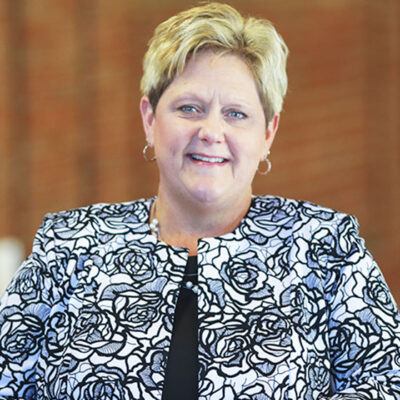
 Lisa Ellrich
Assistant Vice President for Enrollment Management
University of Maine at Farmington
What attracted you to the field of college admission counseling?
As a first-generation student, I feel like my parents and I always knew I would go to college, but figuring out how and where was a mystery for us. The school counselor at the time was not very helpful, and I’m aware that I could have gained more from my undergraduate experience had it been a better fit for me. No one ever discussed fit, how I learn, or what environment would be best for me to thrive in. I did well, but I always felt it could have been a much better experience.
To be honest, it was the realization that dedicated individuals genuinely want to help students find the right colleges that made college admission counseling stand out to me as something I wanted to do. These experts not only care about their own institutions but also strive to match students with the best options for them. With so many choices available today, along with factors such as cost and affordability, the admissions process can feel overwhelming, especially for students and families navigating it for the first time. I interned in the admissions office during my senior year of college and I was hooked.
What is your favorite part of the job?
My favorite part of my job is witnessing the entire process come together for a student and their family. I love seeing their joy and excitement as they take their next steps, knowing that we played a role in that decision and supported them along the way. Move-in day is truly amazing; it’s a whirlwind of emotions, both good and bad. While there’s plenty of anxiety and stress, there’s also a sense of pride and joy that makes it all worthwhile.
In my current role, I spend less time with students and families and more time in meetings. However, whenever I’m feeling down, I know that I can ask to take one of the appointments coming into the office that afternoon. This always reminds me of where it all started. Ultimately, it’s about making a difference in others’ lives as they navigate one of their biggest decisions.
How has NACAC played a role in your career?
NACAC and our regional affiliate, NEACAC, have played a significant role in my career. They have contributed immensely to both my personal and professional growth by offering opportunities to learn about various trends and changes in the field. Their support has greatly boosted my confidence in the roles I have held, thanks to the mentorship I’ve received from others in my field.
My involvement with these organizations has also led to meaningful professional and personal friendships. Being part of a variety of committees and seeing how the association is involved in not just local but national and international issues is incredible. Working in the Western Mountains of Maine can sometimes feel very isolating compared to an urban area where you may change the school you work for and it hardily even impacts your commute. However, my participation in these organizations serves as a constant reminder that I am not alone. There is always someone available to discuss ideas or provide advice. The support from my peers is truly invaluable. I wouldn’t be where I am today without it.
What do you think is the biggest challenge facing our profession today?
Our profession is currently facing numerous challenges, making it difficult to focus on just one issue. It feels like all these problems are converging to create a perfect storm. The demographic cliff, changes in financial aid, ongoing attacks from the federal administration affecting international applicants, and the declining perceived return on investment (ROI) of a college degree present significant difficulties that lead many of us to question why we remain in this field. This doesn’t even address how AI is influencing how students gather information for their college research.
Today’s students differ in how they earn college credits through options such as early college programs and online learning. However, I believe they still share common factors that influence their decisions. They seek independence, wish to pursue career paths that interest them, and are eager to make their own choices. As long as these fundamental aspects remain consistent, we can navigate the challenges ahead, provided we are also willing to adapt our methods.
What I observe on campus among faculty and staff in response to these issues may appear to be a reluctance to change — people digging in their heels, so to speak. However, I believe much of this behavior is a form of grieving. Change is seldom welcomed, and with so many factors impacting our world, it’s understandable to feel a sense of loss for “the good old days.”
When you aren’t working, what do you like to do?
In my free time, I enjoy skiing, gardening, traveling, and cooking. Living in the Western Maine Mountains provides endless opportunities for outdoor recreation, and I love exploring the region and showing friends and family around when they visit. You may also find me walking and/or playing with my Westie, Bella. My favorite thing to do is visit my daughter and son-in-law in England.
What five words would you use to describe yourself?
A previous supervisor often referred to me as “their Hail Mary Pass.” He always said I was his clutch player or a problem-solver.
I would also say: open-minded, empathetic, competitive (at times), and action-oriented. Overall, I would say I’m a great team player and leader, but I also like to help others step up to the plate and get credit for the hard work they put in. I want the team to feel valued and important in the roles they play, and I want others to see and recognize it as well. I really love seeing young colleagues excel in their roles.
Published April 6, 2026