
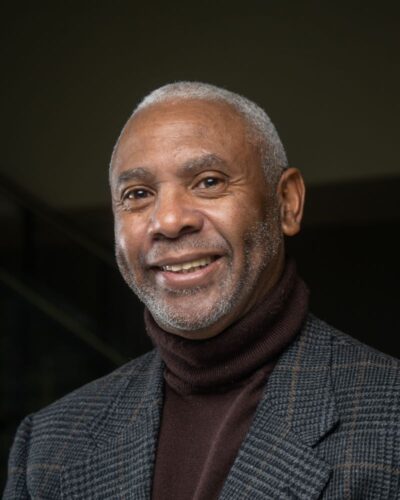
 Keeon Gregory
Dean of College Counseling
Greensboro Day School (NC)
What drew you to the world of College Counseling?
My journey into college counseling began long before I knew it was a profession. I have always been drawn to helping people see their potential and achieve their goals. As a child, I could not name that instinct; as an adult, I understand it as leadership and college counseling.
The spark began the summer between my sophomore and junior years of high school when college mail arrived after I took the PSAT. The very first letter, from Purdue University, captured my attention. I knew I wanted to go to college, even if I did not yet know why. Curiosity took hold.
This was before the internet, so weekends were spent in the library with the Barron’s and Peterson’s guides, writing handwritten letters to admissions offices. When school resumed, friends asked how I knew so much about colleges. I helped them explore options and write letters, without realizing I was already doing the work I would one day love.
That clarity came my senior year when an AP Economics teacher asked what we wanted to be after college. I said I wanted to be a high school guidance counselor. The room erupted with laughter. Rather than discouraging me, the moment strengthened my resolve.
Today, I bring that same sense of purpose to my work. The joy of seeing students gain admission, find confidence, and take their next step is deeply gratifying.
What is your favorite part of the job?
I deeply value the connections I build with students and their parents and the opportunity to be on this college journey with them. There is nothing more gratifying than working together to find a college that is truly the right fit and then seeing a student matriculate feeling confident, excited, and proud, while parents finish the year feeling happy and reassured. What makes this work especially meaningful is that these relationships often continue for years beyond high school, long after the application process has ended.
I am equally energized by the opportunity to travel to college campuses, meet new people, and continually grow as a professional. Visiting campuses and learning directly from admission professionals helps me better inform my students and families. It strengthens my knowledge base and allows me to build a broad and trusted network that directly supports my work.
How has NACAC played a role in your career?
I have been fortunate to attend NACAC conferences over the past 30 years, and each time I am able to go, I make the most of the experience. I reconnect with colleagues from the past, meet new people, attend fantastic sessions, and always walk away energized and recharged. The greatest impact on my career has been the incredible network and wealth of knowledge I gain from so many generous and inspiring people. The relationships I have built are long-lasting and continue to open new doors and opportunities for the future. Few places offer this kind of connection and growth, whether at a NACAC or SACAC conference, and I look forward to attending for many years to come to grow my professional network.
What is the biggest challenge facing our profession today?
I believe two of the biggest challenges in education today are deeply connected: the mental health crisis and grade inflation. In my work as a college counselor, I regularly hear students describe feeling stressed, anxious, and overwhelmed. This reality makes it essential that I am not only a strong listener, but also a steady encourager who helps students see themselves clearly and compassionately.
Much of their anxiety centers on grades and college outcomes. Students often measure their self-worth by GPAs and school names, comparing themselves constantly to others. Grade inflation complicates this further. When so many students earn top grades and GPAs exceed 4.0, an A no longer reflects a true distinction of intellect. This can create a false sense of certainty while quietly intensifying doubt, fear, and pressure.
In this way, grades influence mental health, and fragile mental health fuels the pursuit of perceived perfection. My hope is that educators and researchers continue to explore this connection so we can better support young people, promote perspective, and help students grow into confident, healthy adults who understand that their value extends far beyond a transcript.
When you are not working, what do you like to do?
Any chance I get, I head to the beach. Since my wife and I moved to North Carolina six years ago, we have learned there is nothing better than a long weekend at the coast. We have enjoyed the Outer Banks, Emerald Isle, and Carolina Beach. Sitting on the sand, listening to the waves, and ending the day with a great seafood meal never gets old.
I also love jogging and walking. As a former collegiate track and field athlete, I still get out three or four days a week for a solid two- to three-mile jog or a long, hour-long walk. I enjoy being outside, feeling the sun, hearing birds chirp, watching cloud formations, and using that time to move, reflect, and appreciate the beauty of nature.
I also enjoy attending plays and concerts. Most recently, my wife and I saw The Outsiders and MJ: The Musical. Each year we also make time for a few concerts, including Alicia Keys, Sting, Jill Scott, and Boney James.
What five words best describe yourself?
Caring. Insightful. Experienced. Focused. People-connector.
Published Feb. 2, 2026